
A behind‑the‑scenes blog for players and fellow indie developers
Building Fields of Valour: Normandy has been a long, detailed and genuinely rewarding creative process, one that blends game design, graphic production, Photoshop work, marketing strategy and a lot of iteration. As an indie developer, every part of the project has to be shaped by hand, from the first concept sketches to the final downloadable build, and this blog gives a look at what goes into bringing a strategy game like this to life.
Designing the Visual Identity
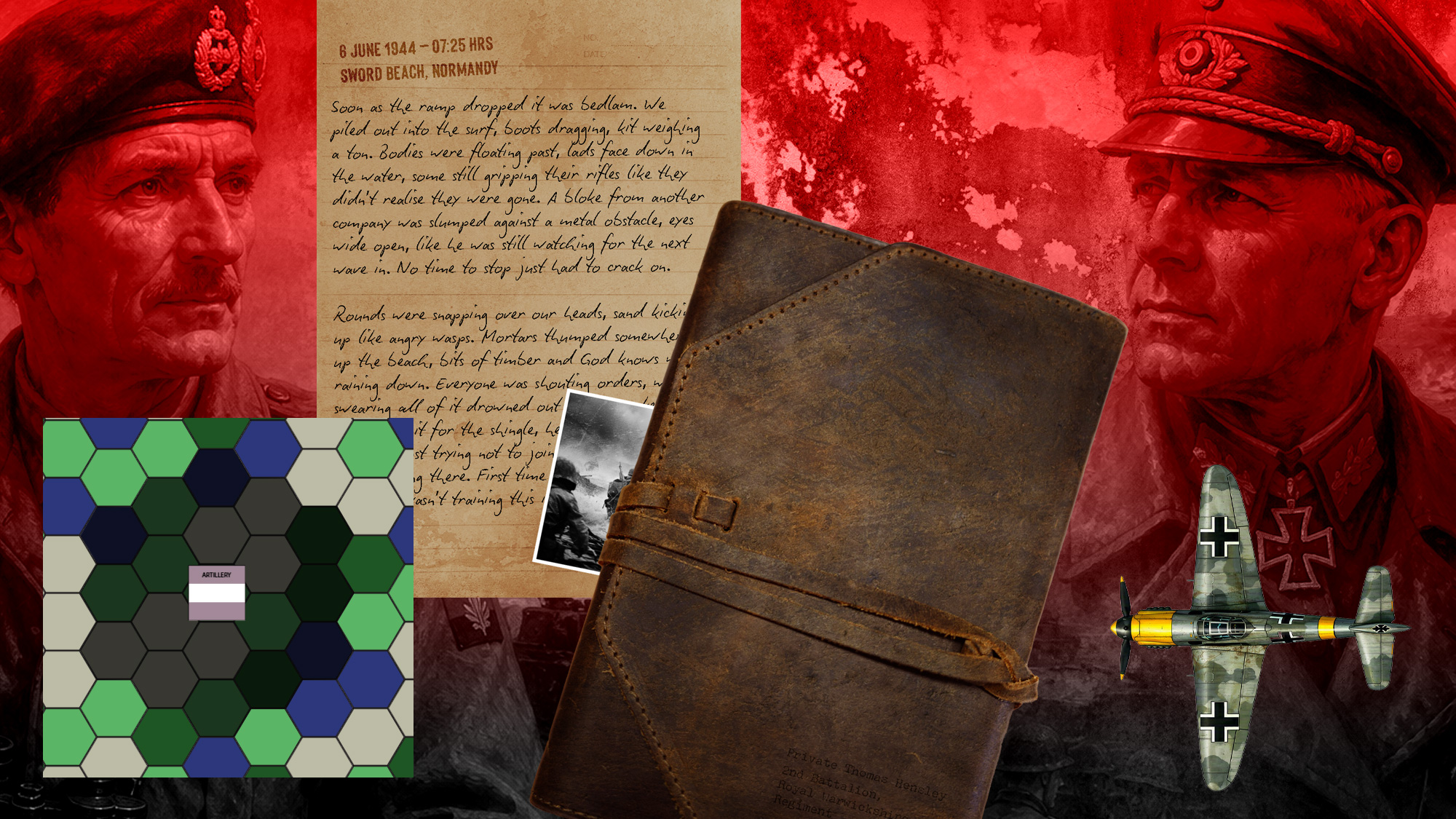
Before a single mechanic was coded, the game needed a visual language. Normandy has a distinct atmosphere, muted tones, earthy terrain, military iconography — and the challenge was to capture that without overwhelming the player. Every hex tile, unit icon and terrain marker began as a Photoshop sprite, built layer by layer to ensure clarity on the board. Infantry silhouettes, tank profiles, artillery shapes and bonus icons all had to be readable at a glance, even when zoomed out.
Sprite work is meticulous. Each unit requires multiple states: normal, weakened, bonus‑active, vulnerable. Terrain tiles need variations for woods, hills, towns, open fields and objectives. The goal is always the same: make the board feel alive, but never cluttered. Good strategy games rely on visual clarity, and that principle guided every design decision.
Creating Posters, Key Art and Social Media Assets
Once the game world had a visual identity, the next step was creating the materials that introduce it to players. Posters, header graphics, announcement banners and social media concepts all stem from the same design foundation. These pieces need to communicate the tone of the game instantly, tactical, historical, grounded, while also being eye‑catching enough to stand out in a crowded indie landscape.
Marketing art often requires a different mindset from in‑game graphics. It’s less about clarity and more about atmosphere. Dramatic lighting, bold typography, layered textures and carefully composed scenes help convey the scale of the conflict and the strategic depth players can expect. These assets become the face of the game across platforms, so they need to be polished, consistent and recognisable.
What Goes Into Marketing an Indie Game
Marketing is one of the most challenging parts of indie development because it demands constant creativity and communication. A game doesn’t simply appear, it has to be introduced, explained and showcased. That means:
- Building a visual brand that players can identify instantly.
- Creating regular content such as screenshots, dev updates, feature highlights and behind‑the‑scenes posts.
- Designing promotional materials that look professional and reflect the quality of the game.
- Maintaining social media presence to keep players engaged throughout development.
- Crafting a clear narrative about what makes the game unique.
Indie marketing is about building trust and interest long before release. Players want to see progress, understand the vision and feel part of the journey. Sharing development insights, early art, prototype screenshots and gameplay clips helps create that connection.
Bringing It All Together
The development of Fields of Valour: Normandy has been a blend of design, strategy, art and communication. Every sprite, every mechanic, every promotional image contributes to a cohesive whole. The game is the result of countless small decisions, adjusting colours, refining icons, rewriting tooltips, redesigning posters, polishing social media layouts, all aimed at creating a tactical experience that feels both accessible and authentic.
This blog is just the beginning. As development continues and new theatres of war are explored, more behind‑the‑scenes posts will follow, covering everything from engine expansion to advanced design workflows.